

Sewer line problems have a way of revealing themselves gradually, and for homeowners in Valley Park, MO, the conditions that accelerate pipe deterioration are widespread. From the mature trees lining residential streets near Vance Road to the older properties situated closer to the Meramec River corridor, root intrusion, aging pipe materials, and the accumulated effects of decades of use create sewer line conditions that eventually require more than a repair. At Beis Plumbing, we work with Valley Park homeowners regularly and understand that recognizing the signs pointing toward sewer replacement early is the difference between a planned, minimally disruptive solution and an emergency that disrupts the entire property. Our trenchless sewer line replacement and repair services offer Valley Park homeowners a modern approach that resolves serious sewer line conditions without the excavation and landscape damage associated with traditional replacement methods.
How to Recognize and Resolve Frequent Clogs in Your Sewer Line
Recurring clogs that keep coming back despite repeated clearing are one of the clearest indicators that the sewer line itself has a structural or accumulation problem that surface-level remedies cannot fix. In our service calls throughout Valley Park, Beis Plumbing consistently finds that homeowners dealing with frequent clogs have been addressing the symptom rather than the cause, often for months before reaching out for professional assessment.
A single clog that clears and does not return is typically a localized blockage that was successfully resolved. A clog that returns within days or weeks, or that requires professional clearing on a recurring schedule, indicates that something within the pipe is creating conditions for continuous blockage. This can be a partial collapse that traps debris, a significant root intrusion that has narrowed the effective pipe diameter, or heavy grease and scale accumulation that has built up on pipe walls over many years. Foul odors from drains, gurgling sounds during water use, and soggy spots in the yard frequently accompany the clog pattern and provide additional diagnostic context. Ignoring these combined signs consistently leads to more extensive damage and more disruptive repair situations. Beis Plumbing thoroughly assesses recurring clog conditions to determine whether the sewer line has reached a point where replacement is the more practical and cost-effective solution compared to continued repairs. Timely professional evaluation prevents the kind of major emergency that causes the greatest disruption and expense.
Are You Noticing Slow Drains in Your Home?
Slow drains throughout the home, particularly when the slowness affects multiple fixtures simultaneously rather than just one, are a reliable early indicator that the sewer line is not moving waste and water at the rate it was designed to handle. This symptom deserves prompt professional attention rather than the wait-and-see approach that many homeowners initially take.
When a single fixture drains slowly, the cause is typically localized to that fixture’s individual drain branch. When multiple fixtures throughout the home, including sinks, showers, and toilets on different parts of the property, all drain more slowly than normal, the restriction is almost certainly in the main sewer line. Common causes include significant root intrusion that has narrowed the pipe interior, heavy scale or grease accumulation on pipe walls, partial pipe collapse from ground movement or deterioration of the pipe material itself, and joint separation that has allowed soil infiltration. A professional camera inspection by Beis Plumbing provides a definitive picture of what is actually happening inside the pipe. It allows the correct recommendation to be made based on actual conditions rather than guesswork. Addressing slow drains when they first become noticeable consistently produces better outcomes than waiting until the situation progresses to backups or a complete stoppage.
Smelling Something Funny? Here’s What It Means
Unusual odors inside the home or on the property are among the most actionable warning signs that a sewer line problem has developed to a point requiring professional attention. Based on what we see in Valley Park properties, odors that homeowners describe as sewage-like, musty, or like something rotting in the yard almost always have a direct connection to the condition of the sewer line.
A sewage smell inside the home, particularly near drain openings or in the basement, indicates that sewer gases are entering the living space through a compromised section of the pipe system. This represents both a plumbing failure and a health concern, as sewer gases include compounds that are harmful when inhaled in enclosed spaces over time. A musty or mold-like odor in areas near pipe runs can indicate that a slow leak has been introducing moisture into surrounding building materials, allowing mold to establish itself. A rotten or sewage-like smell in the yard, particularly in specific areas above underground pipe runs, is a strong indicator that effluent is escaping from the sewer line and saturating the surrounding soil. This condition contaminates the soil, threatens nearby plant life, and can affect neighboring properties if not addressed. Beis Plumbing treats sewer odor reports as priority situations because the conditions that produce them tend to worsen quickly. Timely sewer line replacement when the pipe has deteriorated beyond repair prevents the more extensive damage and health risks that develop when these odor conditions are allowed to continue.
Odd Grass Growth in Your Yard: What Should You Do?
Irregular grass growth patterns in the yard are a visual clue that many Valley Park homeowners do not immediately associate with sewer line problems. Still, the connection is direct and well established. When a sewer line leaks below grade, the effluent it releases into the surrounding soil acts as a concentrated fertilizer, producing patches of unusually lush, dark green grass directly above the pipe. Conversely, areas where the pipe has collapsed or where a developing void has displaced soil may show stressed or sparse grass growth as the ground conditions change.
Carefully observing the yard for these patterns, particularly in areas that align with the known path of the underground sewer line from the home to the street, provides meaningful information about where a problem may be developing. Foul odors in the same area, pooling water with no surface source, or soft spots in the ground above the pipe run all reinforce the likelihood of a sewer line issue. A professional evaluation from Beis Plumbing, including a camera inspection of the line, confirms whether yard conditions are connected to sewer line deterioration and how extensive the damage is. Acting on these yard signals promptly prevents the developing pipe failure from progressing to a point where it creates structural concerns for the home’s foundation or significant contamination of the surrounding soil. Damaged water lines in the area can also contribute to structural problems, and Beis Plumbing’s water line repair and replacement services address those concerns as part of a comprehensive evaluation when multiple issues are identified.
Benefits of Trenchless Sewer Replacement for Your Home
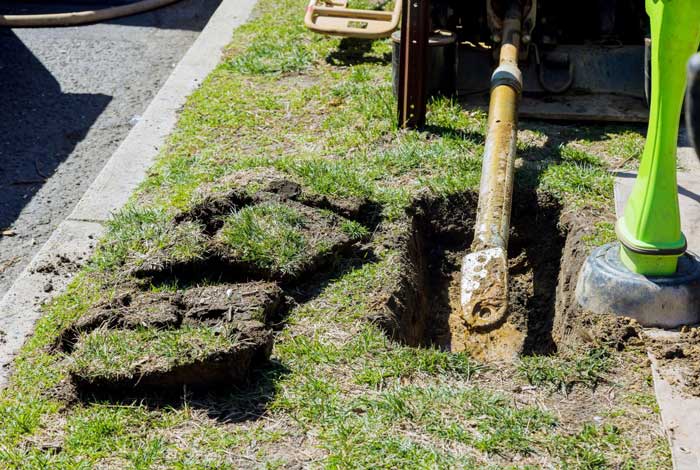
For Valley Park homeowners whose sewer line assessment confirms that replacement is necessary, trenchless technology represents a significant advancement over the traditional approach of excavating the entire pipe run to install new pipe. The practical advantages are meaningful and directly relevant to homeowners who want the problem resolved without the associated disruption of major excavation.
Trenchless sewer replacement installs a new pipe through existing access points, rather than requiring a trench to be dug the full length of the pipe run. This means the lawn, landscaping, driveway, or hardscaping above the pipe is preserved rather than removed and restored. The reduction in excavation also significantly shortens the overall project timeline, minimizing the period during which the household’s plumbing is disrupted. The materials used in trenchless replacement are engineered for durability and longevity, typically carrying significantly longer expected service lives than the older pipe materials they replace. The smooth interior surface of the newly installed trenchless pipe also resists the root intrusion and scale accumulation that contributed to the original pipe’s deterioration, reducing the likelihood of recurrence. For Valley Park homeowners weighing the cost of trenchless replacement against continued repair of a failing sewer system, the combination of reduced disruption, durable materials, and long-term reliability consistently makes trenchless replacement the more financially sound decision over a multi-year horizon. Beis Plumbing guides homeowners through this evaluation honestly and provides clear information about what the assessment reveals and what the recommended course of action will accomplish.
Protecting Your Valley Park Home’s Sewer System for the Long Term
The warning signs covered in this guide, from recurring clogs and slow drains to sewer odors and irregular yard conditions, all indicate that the sewer line has developed a condition that will not improve without professional intervention. Valley Park homeowners who recognize these signals early and contact Beis Plumbing for a professional assessment consistently achieve better outcomes at lower overall cost than those who defer action until a crisis develops. Our team brings the diagnostic expertise, modern trenchless technology, and honest service approach that Valley Park homeowners deserve when facing one of the most significant plumbing challenges a home can present. Contact our team today to schedule your sewer line assessment and take the first step toward a lasting solution for your Valley Park home.