


Here’s What Sets Us Apart:
the First Time
and Affordable Pricing
Service
When was the last time anyone looked inside your sewer line? For most homeowners, the honest answer is never, at least not until a drain backs up. Beis Plumbing offers sewer line inspection, repair, and replacement for Creve Coeur homes, and we make it easy to find out what is going on underground before a small problem turns into a basement full of water.
We start with a video camera inspection that shows the condition of your line from the house to the public sewer. You will see what we see, whether that is a crack, a separated joint, a root mass, or a pipe in good shape that just needed cleaning. Then we give you straightforward repair options and a recommendation we would be comfortable making for our own homes.
Creve Coeur added well over a hundred subdivisions in the 1950s and 1960s, and many of those homes still have their original sewer laterals. After 55 to 70 years of service, those lines are prime candidates for a closer look.
Beis Plumbing is excellent at a fair price. Technician Sean was professional, courteous, and efficient. He ran a line and camera through our sewer line and kept me informed all the way. I will definitely use Sean and Beis again.
First time calling Beis Plumbing and I couldn’t be happier. My sewer line backed up while I was doing laundry and water came up around the drain in my basement. Beis was able to come out right away and fix the problem. Everyone I spoke with at Beis were so helpful, communicated well and extremely pleasant. I’ll use them again and recommend them to everyone.
They did a nice job of working through the problem and spoke with the sewer district to help bring them in to solve a problem with the main line. The only issue is that they don’t have great communication during their emergency off hours – not a firm yes we are coming or no we aren’t showing up.

Sewer problems in Creve Coeur often follow the seasons, so the time of year a symptom appears can tell you a lot.
A pattern that returns year after year is rarely a coincidence. If any of these sound familiar, a camera inspection can identify the cause and help you plan a repair on your schedule instead of during an emergency.
Much of what happens to a sewer line comes down to how it was installed. During the building boom of the 1950s and 1960s, crews laid clay and cast iron laterals quickly to keep up with demand, commonly setting pipe on native clay soil with minimal bedding underneath. That was typical at the time, but it left many lines with little support once the ground began to move.
In Creve Coeur, the ground moves plenty. The clay soil common across St. Louis County expands when spring rains soak in and contracts during hot, dry stretches of summer. Winter freeze and thaw adds another round of movement near the surface. Over decades, that slow push and pull can work joints apart and open small gaps along the line.
The trees that make Creve Coeur’s older subdivisions so appealing are part of the story as well. Large oaks, maples, and sycamores planted when these neighborhoods were new are now fully grown, and their roots are quick to find any gap that leaks moisture. Once inside, they widen the opening and trap debris.


On a large Creve Coeur lot, a sewer lateral may run a long distance from the house to the main, and the damage is not always in just one place. That is why our repair recommendations start with a full-length camera inspection. We note the location and depth of every problem area so we can decide whether a targeted fix or a complete solution makes more sense.
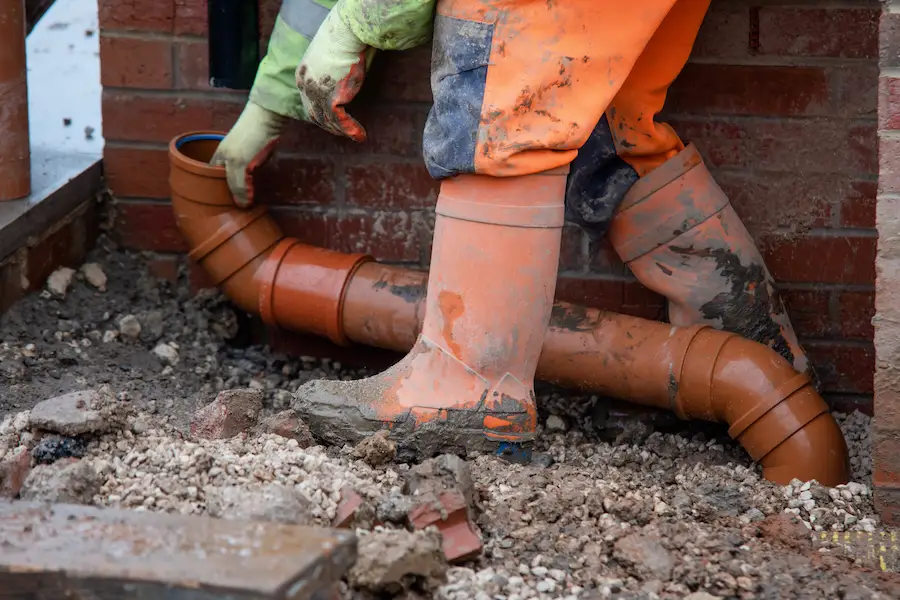
If the line is solid except for one or two trouble spots, spot repairs let us dig only where needed and replace those sections with PVC. When problems are scattered along the run but the pipe still holds its shape, trenchless lining can seal every joint at once without trenching across a wide lawn or under a long driveway. If the line has failed in many places or is badly misaligned, full replacement is usually the better long-term value.
Once the work is complete, we run the camera again to verify the result and restore the work area. You will get a clear explanation of what was done and what to watch for going forward.
One of the most common sewer problems in Creve Coeur is separated or offset joints in long clay laterals. Many homes here sit on lots of a third of an acre or more, and established subdivisions such as Ladue Estates, Runnymede, and Williamsburg include larger parcels where the house is set well back from the street. A longer sewer line means more pipe sections, more joints, and more opportunities for something to go wrong.
Clay sewer pipe from the 1950s and 1960s was laid in short lengths, and each joint relied on a simple seal that hardens and cracks with age. As clay soil shifts through wet and dry seasons, those joints can pull apart or slide out of line, leaving a lip that catches paper and waste. Gaps also let roots and groundwater in, which speeds up the damage.
Imagine a homeowner like Tom in Runnymede who calls because his basement drain gurgles and the main line needs clearing more often than it used to. A camera inspection on a line like his might reveal several offset joints spread across a long run of pipe, each one collecting debris. Clearing the line helps for a while, but the joints will keep catching waste until they are corrected.
The right fix depends on how many joints are affected and how far apart they are. A couple of bad joints can often be repaired individually, while widespread separation usually calls for lining the full run or replacing the line with jointless PVC. Our goal is to correct the root cause so the clogs stop coming back.

We know you have options when it comes to hiring a plumber, and we work hard to be the one Creve Coeur homeowners call back.
Sewer repair is a serious investment, and we treat it that way from the first conversation to the final camera check. Contact Beis Plumbing today to get your Creve Coeur sewer line inspected.
Shifting clay soil, settling, and tree roots can push pipe sections out of alignment over time, creating a lip that catches waste.
A longer line has more joints and more chances for problems, so periodic camera inspections are especially helpful on large lots.
Yes, spot repairs limit digging to small areas, and trenchless lining can often fix a long run with minimal excavation.
Recurring slow drains, gurgling, and backups that return after cleaning often point to roots, and a camera inspection can confirm it.
Any time you notice warning signs is a good time, and many homeowners also schedule one before buying a home or starting a major remodel.
We use cookies to improve your experience on our site. By using our site, you consent to cookies.
Manage your cookie preferences below:
Essential cookies enable basic functions and are necessary for the proper function of the website.
You can find more information in our Cookie Policy and .