


Here’s What Sets Us Apart:
the First Time
and Affordable Pricing
Service
Richmond Heights is a compact, close-in suburb bordering Clayton and Maplewood, with a housing mix that ranges from early 20th century brick homes to mid-century ranches. That variety in age and construction style means plumbing setups can look quite different from one block to the next, but water heater warning signs are consistent regardless of what era the home was built. These are the ones worth acting on.
In a densely built community like Richmond Heights where homes sit close together and utility spaces are often compact, a water heater problem that gets ignored long enough can turn into a water damage situation quickly. Acting on these signs early keeps the scope of the problem manageable.
Preston came in and did quality and outstanding work. Very personable, knowledgeable, friendly, courteous and very, professional absolutely loved him! We will be back to Beis!
We had our experience with Beis Plumbing. Kyle and Branden were fantastic! They were thorough and knowledgeable. When we need a plumber again, we are calling Beis!
Beis Plumbing did an amazing job. They responded incredibly fast and were able to schedule me right away. The technician was professional and finished the work quickly.
Steve arrived promptly, evaluated the problem and fixed the seal, thus stopping the leak!. Steve was exceptional! He was friendly, knowledgeable, efficient and gave excellent service.
Cost was reasonable and they gave me options on repair vs replace. Overall, a great experience and would definitely recommend to anyone needing plumbing work.

Richmond Heights has one of the more architecturally layered housing stocks in the inner St. Louis suburbs. Streets near Clayton Road feature brick two-stories from the 1920s and 1930s with original basements that were retrofitted with modern mechanicals over the decades. Moving toward Hanley Road and the residential blocks closer to Maplewood, the housing shifts to smaller ranches and Cape Cods from the postwar era. Each of these building periods brought its own approach to plumbing rough-ins, and servicing water heaters in this city often means adapting to whatever the previous generation of plumber left behind.
Older homes in the area sometimes have water heaters tucked into finished basement utility rooms or tight closet installations with minimal clearance, which creates both access challenges and ventilation concerns. Gas units that are not ventilating properly run less efficiently and can develop combustion problems that look like thermostat or ignition failures until the venting issue is identified and corrected.
Regardless of the home’s age, the water supply in this part of St. Louis County introduces consistent mineral hardness that deposits inside tanks over time. A unit in a 1930s brick home and one in a 1960s ranch will both accumulate sediment at roughly the same rate, and both benefit from the same periodic maintenance to stay ahead of efficiency loss and premature wear.
Beis Plumbing services tank and tankless water heaters throughout Richmond Heights and the broader St. Louis area. Gas, electric, and propane systems are all within our scope, and we carry the components for most standard repairs on the truck so single-visit resolution is the usual outcome.
Tank unit repairs include sediment flushing, anode rod replacement, thermostat and thermocouple service, pressure relief valve replacement, and dip tube repairs. For electric systems, we test upper and lower heating elements individually and trace wiring faults that cause partial heating or breaker trips. Tankless systems require different thinking, especially in an area where mineral content in the supply can coat heat exchangers faster than expected. We descale those units, resolve flow sensor malfunctions, and address ignition failures that produce inconsistent or absent hot water output.
In Richmond Heights specifically, we also pay attention to the installation context. If a gas water heater is sitting in a poorly ventilated space, we will not simply replace a part and leave without flagging the underlying issue. Getting the repair right means understanding the environment the unit is operating in, not just the component that failed.

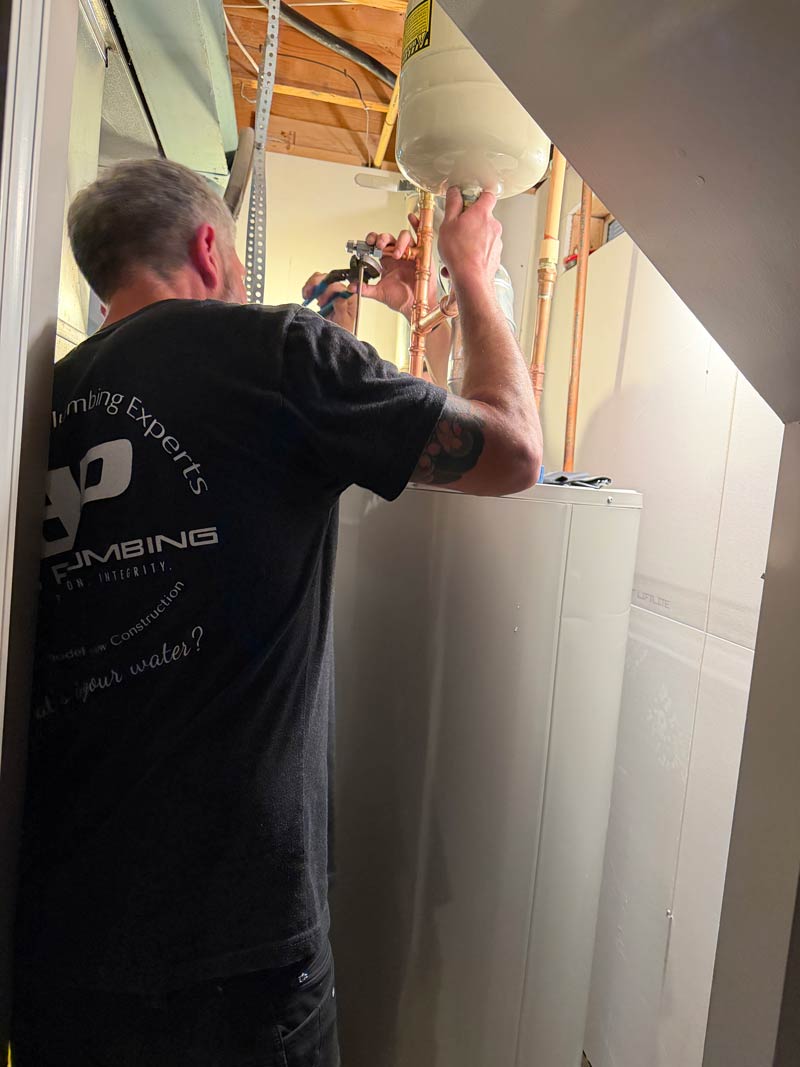
Last spring, we received a call from Gerald, who owns a 1940s brick home near Henley Place in Richmond Heights. He had been noticing that his gas water heater was cycling on far more frequently than it used to, and the utility bills for the past two months had been noticeably higher than the same period the prior year. The hot water itself seemed fine in terms of temperature, so he had put off calling for a while.
When our tech arrived and pulled the unit, the burner assembly showed heavy carbon buildup that was causing incomplete combustion on every cycle. The unit was firing, heating partially, cutting off before the tank reached set temperature, and then restarting the cycle again in short succession. That pattern, cycling frequently without fully satisfying the demand, is a reliable sign of combustion inefficiency rather than a thermostat or element failure.
We cleaned the burner assembly, recalibrated the thermostat, and checked the flue for partial obstruction, which turned out to be contributing to the problem as well. Gerald had his water heater running clean and efficiently the same afternoon. The root cause had nothing to do with a failing component but with a maintenance issue that had been building for a few seasons.

Working in a community like Richmond Heights requires a plumber who can think on their feet. The homes here are not cookie-cutter, and the plumbing setups inside them reflect decades of decisions made by different owners, different contractors, and different eras of code. We have done enough work in the inner St. Louis suburbs to arrive at a job prepared for that variability rather than thrown off by it.
Our goal on every call is to leave you with a water heater that works reliably and an honest understanding of what we found and why we fixed it the way we did.

Yes, and it is one of the more commonly overlooked causes of water heater problems in older homes. A gas water heater that cannot exhaust combustion gases properly will run inefficiently, cycle irregularly, and can develop carbon buildup on the burner over time. If your unit is in a tight or enclosed space, venting is worth checking when other components test fine.
A few. Older homes often have less accessible utility spaces, aging supply and gas lines that may need to be evaluated alongside the water heater, and retrofit installations that may not fully meet current code. We are experienced working in homes of this era and will flag anything we see that is worth knowing about beyond the immediate repair.
Frequent short cycling without fully satisfying hot water demand usually points to a combustion or heating efficiency issue rather than a capacity problem. Burner fouling, a partially obstructed flue, or a miscalibrated thermostat can all cause a unit to run more than it should while still underdelivering. A proper diagnosis will identify which of those is at play.
We would not recommend it. Even a small leak can worsen quickly, and moisture around a water heater creates conditions for mold growth and structural damage in the surrounding area. More importantly, a leak near a gas line or electrical connection is a safety concern. It is worth having it looked at promptly rather than monitoring it.
Yes, we work on both. Older tank units and modern tankless systems have different maintenance and repair needs, and we are equipped for both. If you are not sure what type you have or when it was last serviced, that is a fine starting point for the conversation when you call.
Yes, we work on both and are equipped for whichever type you have.