
Key Points
- Tankless water heaters are 24–34% more energy efficient than traditional tank models for homes using less than 41 gallons of hot water daily — per the U.S. Department of Energy.
- Tankless units last 20+ years; traditional tank heaters last 10–15 years — the longer lifespan is a meaningful factor in the total cost of ownership calculation.
- Traditional heaters win on upfront cost — lower purchase price, simpler installation, and no home system upgrades required in most cases.
- Tankless heaters win on long-term cost — lower energy bills, fewer replacements, and potential savings of hundreds of dollars over a 20-year lifespan.
- Homes using more than 41 gallons of hot water daily may see smaller efficiency gains from tankless — and for very high-demand households, a larger traditional tank may be the more practical choice.
- Both types require professional installation — tankless units may additionally require gas line or electrical upgrades that should be assessed before purchasing.
- Contact Beis Plumbing for a personalized water heater recommendation, same-day service, and flexible financing in the St. Louis area.
Choosing between a tankless vs traditional water heater is a major decision for homeowners looking to upgrade their hot water system. Each option has unique benefits and considerations, and understanding the differences can help you select the best fit for your household.
How Do Tankless and Traditional Water Heaters Work?
Traditional (tank) water heaters store a large volume of water — typically 40–80 gallons — and keep it heated at all times, ready for immediate use. The water is maintained at a set temperature around the clock, whether you’re using it or not.
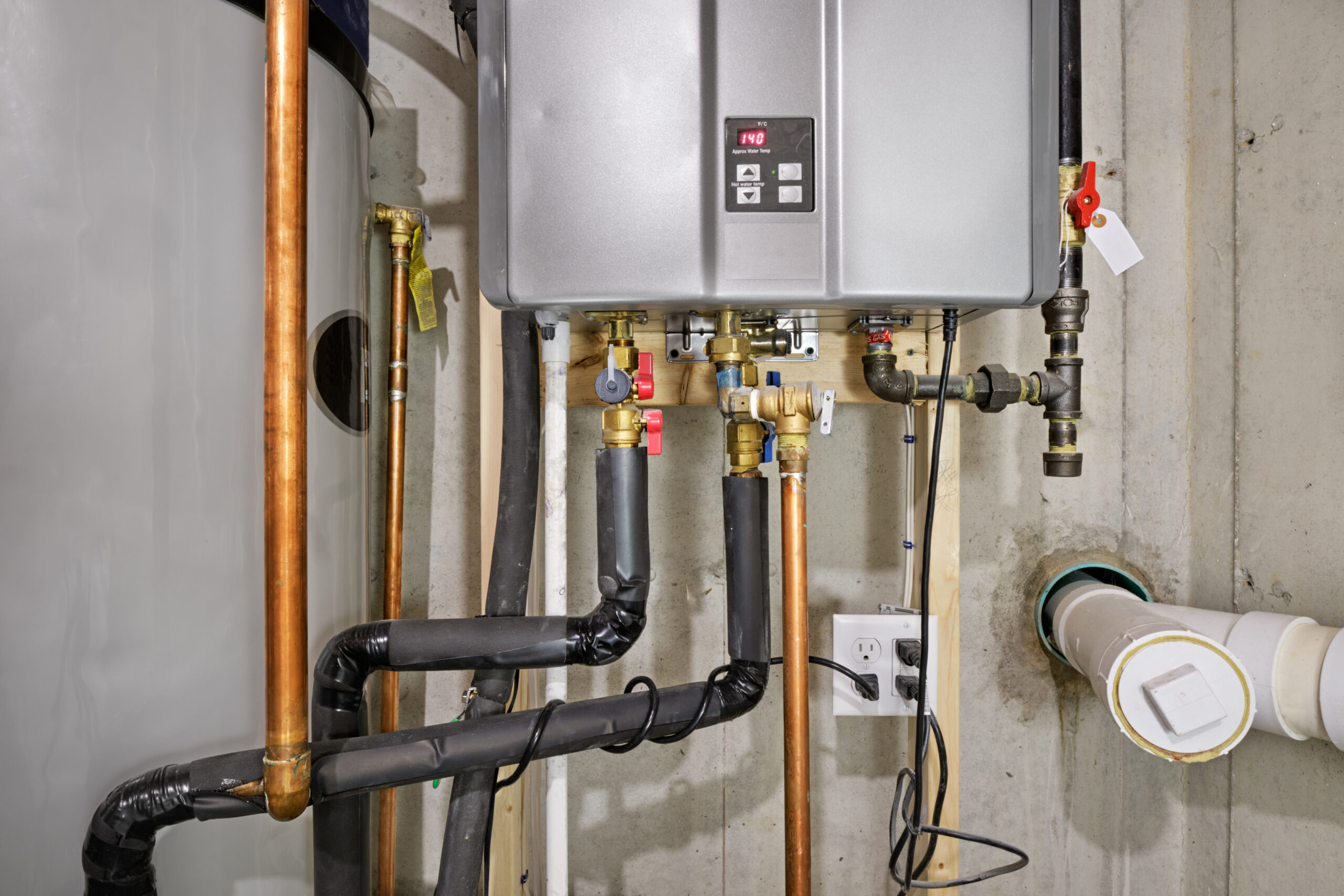
Tankless water heaters heat water on demand using a high-powered burner or electric element — activating only when a hot water tap is opened and shutting off when it’s closed. No storage, no standby heating.
This fundamental difference in operation drives every other comparison between the two types: energy consumption, space requirements, hot water availability, upfront cost, and long-term value.
Pros and Cons of Traditional Water Heaters
Advantages
- Lower initial cost — traditional tank water heaters are less expensive to purchase and install, making them the more accessible choice for budget-sensitive replacements
- Simple installation — most homes are already equipped for tank water heaters, making a like-for-like replacement straightforward with no system upgrades
Disadvantages
- Limited hot water supply — once the tank is depleted, you must wait 20–60 minutes for it to refill and reheat — a real inconvenience for larger households with sequential hot water demands
- Higher energy bills — maintaining hot water around the clock consumes energy continuously, even overnight and during periods of no use — this standby heat loss adds up significantly over time
- Shorter lifespan — traditional tanks typically last 10–15 years before needing replacement, meaning two tank replacements in the same timeframe as one tankless unit
Which Is More Cost-Effective?
While tankless water heaters have a higher upfront cost, they can save you money over time. According to Consumer Reports, tankless models can be 22% more energy efficient on average, potentially saving hundreds of dollars in utility bills over their lifespan.
However, the payback period depends on your household’s hot water usage and local energy rates. For families with high hot water demand, a traditional tank may be more practical.
Installation and Maintenance Considerations
Tankless water heaters require professional installation and may need upgrades to your home’s gas supply line or electrical panel. Annual maintenance — primarily descaling the heat exchanger — helps prevent mineral buildup and preserves performance over the unit’s lifespan.
Traditional water heaters are simpler to install in most homes and require relatively straightforward maintenance: periodic tank flushing to remove sediment, anode rod replacement every few years, and temperature/pressure valve testing. However, as the unit ages, the frequency and cost of repairs tends to increase.
Both types require professional installation to ensure correct sizing, code compliance, and safe gas or electrical connections. Contact Beis Plumbing to schedule a professional assessment of your home’s current setup before purchasing either system.
Environmental Impact
Tankless water heaters are generally the more environmentally responsible choice — their energy efficiency advantage directly reduces the amount of electricity or gas consumed per gallon of hot water produced. Fewer replacements over a homeowner’s lifetime also means less manufacturing and disposal impact.
For homeowners interested in maximizing environmental benefits, pairing a tankless water heater with a solar or renewable energy source further reduces the carbon footprint of your home’s hot water system.
Which Option Is Right for You?
When deciding between a tankless vs traditional water heater, the most important factors are:
- Daily hot water usage — households using less than 41 gallons per day gain the most from tankless efficiency; larger families may benefit from a high-capacity traditional tank or a tankless unit with a higher flow rate
- Available installation space — compact homes or utility rooms with limited space favor the wall-mounted tankless format
- Budget for upfront vs. long-term costs — tankless costs more now but saves more over time; traditional is more accessible upfront
- Length of homeownership — long-term residents benefit more from tankless investment; shorter-term owners may prefer the lower upfront cost of traditional
- Willingness to upgrade home systems — homes requiring gas or electrical upgrades for tankless add cost to the initial investment that should be factored into the comparison
Consulting a professional plumber helps you assess your home’s specific situation — current infrastructure, water hardness, demand patterns, and budget — to make an informed decision rather than rely on general guidelines.
For more details on water heater options and installation, visit our Water Heaters page.
Why Choose Beis Plumbing?
Beis Plumbing offers expert advice and installation for both tankless and traditional water heaters. Our licensed technicians provide personalized recommendations, same-day service, and flexible financing options to make your upgrade easy.
Ready to Upgrade Your Water Heater?
Contact Beis Plumbing today to schedule a consultation or book your installation. We’ll help you find the perfect solution for your home’s hot water needs.