
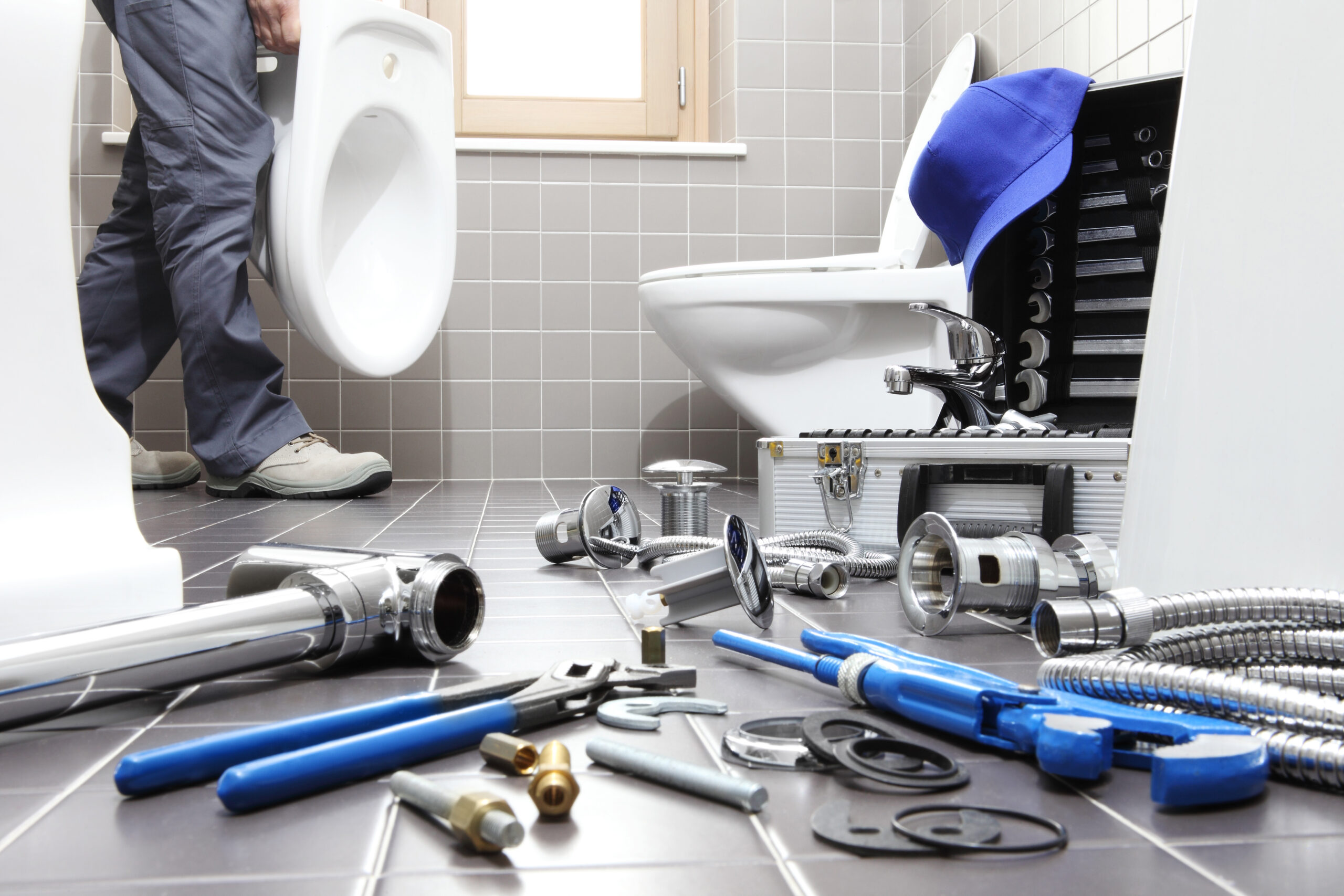
Most Common Plumbing Jobs Your House Might Need
Key Points
- Every home will eventually need plumbing service — knowing the most common jobs helps you identify problems early and avoid the expensive emergency repairs that follow from delayed action.
- According to the U.S. Environmental Protection Agency, a faucet dripping once per second wastes over 3,000 gallons of water per year — one of the most preventable sources of water waste in any home.
- Tank water heaters last 8–12 years — inconsistent temperature, strange noises, rust-colored water, and base leaks are the four clearest signs it’s time to act.
- Burst or leaking pipes can cause thousands of dollars in water damage within hours — unexplained high water bills, water stains on walls or ceilings, and decreased water pressure are early warning signs to watch for.
- For sewer line problems (slow drains, gurgling toilets, foul odors), professional camera inspection is the only reliable way to diagnose the issue before it becomes a full replacement.
- Many plumbing problems are fixable early and inexpensively — but the same problems become far more costly when ignored.
- Contact Beis Plumbing for expert plumbing service — from minor repairs to major installations throughout the St. Louis area.
Every home will eventually require plumbing services, whether for routine maintenance, repairs, or new installations. Knowing the most common plumbing jobs can help homeowners stay ahead of potential issues and ensure their plumbing system runs smoothly.
1. Fixing Leaky Faucets
A dripping faucet is more than just an annoyance — it can waste a significant amount of water over time. According to the Environmental Protection Agency (EPA), a single faucet leaking one drip per second wastes over 3,000 gallons of water per year (source). That’s enough water for more than 180 showers.
Common causes of leaky faucets:
- Worn-out washers or O-rings — the most frequent cause in compression faucets
- Damaged cartridges — common in single-handle faucets
- Corroded valve seats — can cause leaking around the spout
- Loose packing nuts — often responsible for leaks near the handle
Replacing worn washers, seals, or cartridges resolves most faucet leaks. If the leak persists after a basic repair, the faucet body itself may be corroded and warrant full replacement.
2. Unclogging Drains
Clogged drains are among the most frequent plumbing calls — caused by the gradual accumulation of grease, hair, food particles, and soap scum inside drain lines. Most homeowners deal with at least one significant drain clog per year.
DIY options for minor clogs:
- A plunger for simple blockages near the drain opening
- A drain snake for clogs further down the line
For persistent, recurring, or multi-drain blockages, professional hydro-jetting is the most effective solution — thoroughly scouring the interior of pipes and removing buildup that household methods leave behind. If multiple drains in your home are slow simultaneously, that points to a main line issue rather than individual fixture clogs, and warrants a professional inspection.
3. Repairing or Replacing Water Heaters
Tank water heaters have a lifespan of approximately 8–12 years. Knowing the signs of a failing water heater helps you plan a replacement on your schedule — rather than being forced into an emergency call when the unit fails completely.
Signs your water heater may need repair or replacement:
- Inconsistent water temperature — the heating element or thermostat may be failing
- Strange noises from the tank — rumbling or popping typically indicates sediment buildup on the heating element
- Rust-colored water — suggests internal tank corrosion, which is not repairable
- Leaks around the base of the unit — often indicates a cracked tank that requires replacement
Regular flushing and professional maintenance help extend the lifespan of your water heater and prevent the sediment buildup that’s behind most efficiency losses and noise complaints. Contact Beis Plumbing for water heater inspection, maintenance, and replacement service.
4. Toilet Repairs and Replacements
Toilet issues are among the most common household plumbing calls — and many are more straightforward to resolve than homeowners expect.
Common toilet problems and typical fixes:
- Constantly running toilet — usually a worn flapper or faulty fill valve; relatively inexpensive to replace
- Weak or incomplete flush — may indicate a partially clogged trap, a worn flapper, or low water level in the tank
- Leaking at the base — often a failed wax ring seal between the toilet and the floor flange
- Rocking or unstable toilet — loose floor bolts or a damaged floor flange
For older toilets — particularly those manufactured before 1994 — full replacement with a modern low-flow model often makes more financial and environmental sense than continued repairs. New toilets use as little as 1.28 gallons per flush compared to older models that used 3.5–7 gallons.
5. Fixing Burst or Leaking Pipes
A leaking or burst pipe can cause extensive and rapid water damage — water intrusion that reaches flooring, walls, and structural framing within hours of a failure. Acting quickly is essential.
Warning signs of a pipe leak:
- Unexplained spikes in water bills — even a slow leak wastes significant water over time
- Water stains on walls or ceilings — indicate a leak inside the wall or above the ceiling plane
- Decreased water pressure — may indicate water is escaping through a crack or joint failure
Common causes of burst or leaking pipes:
- Freezing temperatures — water expands when it freezes, generating enough internal pressure to split a pipe; particularly common in uninsulated exterior walls
- Pipe corrosion — aging galvanized steel and copper pipes develop pinhole leaks as the pipe wall thins
- High water pressure — sustained pressure above 80 psi stresses pipes, joints, and fixtures over time
If you suspect a pipe leak, shut off the main water supply immediately and contact Beis Plumbing for emergency service. The faster the source is identified and repaired, the less secondary damage results.
6. Garbage Disposal Repairs
Garbage disposals are a frequently used kitchen appliance — and a frequently needed plumbing repair call. Most disposal problems fall into a few predictable categories.
Common garbage disposal issues:
- Jammed disposal — the most common issue; caused by hard food items (bones, fruit pits) or foreign objects lodged in the grinding chamber. Try the reset button on the bottom of the unit first, then use the Allen wrench hex socket to manually rotate the blades.
- Humming but not spinning — the motor is receiving power but the grinding plate is jammed; manual rotation usually frees it
- Leaking from the base — indicates internal seal failure; the unit typically needs replacement rather than repair
- Persistent odors — caused by food residue buildup; flush monthly with baking soda and vinegar
If resetting the unit or manually rotating the blades doesn’t resolve the problem, a professional plumber can determine whether repair or full replacement is the better investment based on the unit’s age and condition.
7. Sewer Line Repairs
Sewer line problems are among the most serious plumbing issues a homeowner can face — and they’re often the last thing identified because the damage develops underground and out of sight.
Warning signs of a sewer line problem:
- Multiple slow-draining fixtures simultaneously — when more than one drain is slow, the problem is in the main line, not individual fixtures
- Gurgling sounds from toilets — air displacement from a partially blocked sewer line
- Foul odors from drains or yard — sewer gas escaping through cracks or gaps in the line
- Wet spots or unusually green patches in the yard — sewage leaking into the soil from a damaged underground line
Professional plumbers use camera inspection to assess sewer line condition — identifying blockages, cracks, root intrusion, and section collapses before committing to a repair approach. Camera inspection is the only reliable way to diagnose sewer line problems accurately. Depending on the findings, repair options range from spot repairs and hydro-jetting to full trenchless sewer line replacement.
When to Call a Professional Plumber
While some minor plumbing tasks can be handled with DIY solutions — replacing a faucet aerator, clearing a simple drain clog, or pressing the disposal reset button — most plumbing problems benefit significantly from professional service.
Always call a professional for:
- Any suspected pipe leak inside walls or ceilings
- Water heater repair, replacement, or gas line connection
- Sewer line symptoms (multiple slow drains, gurgling, outdoor odors)
- Burst pipes or active flooding
- Recurring clogs that return after DIY clearing
- Toilet leaks at the base (wax ring replacement involves removing the toilet)
Professional plumbers ensure long-term solutions, identify root causes rather than just symptoms, and prevent the secondary damage that often follows DIY repairs that don’t fully resolve the underlying problem.
Get Expert Plumbing Help Today
If you’re experiencing plumbing issues, Beis Plumbing is here to help. Our expert team handles everything from minor repairs to major installations. Contact us today for reliable plumbing services you can trust!